Energy
Tuesday, July 27, 2010
Monday, July 26, 2010
Can Milkthistle Cause Palpatations?
Mobility health statistics
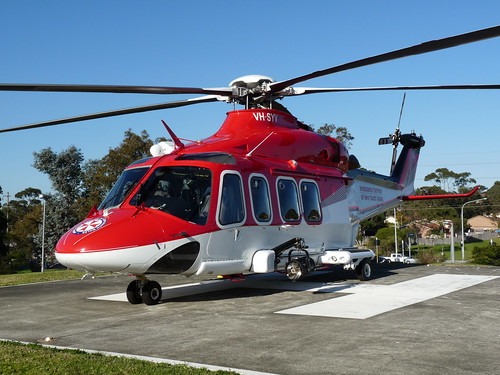
In recent days, I happened to talk to a patient (which probably will devote more calmly another post) that comes from Sicily and who, like me , is on the waiting list for cardiac transplantation at Niguarda Hospital in Milan. He too is here all'IRCCS S. Maria Nascente (Don Gnocchi) for monitoring, rehabilitation, and to simplify the logistics of the transfer case was called for intervention.
Atto I learn that the Region of Sicily as a whole probably will not cover expenses incurred to this hospital, so the guy runs the risk of being sent home in Sicily, or to incur the costs of a private residence near Milan.
I explain that the problem varies from region to region, partly because the budgets of regional ASL are different from each other, as well as their financial situation. The situation is in part dependent on the flows into and out of patients in the region and their balances, positive or negative.
In practice: if a region provides more medical care to patients who are not residents of those residents that patients receive outside of the region, active case of net migration (the ASL in the region "gains", let the term). However, if the benefits that patients receive residents in the region are greater than those outside the region offers to non-residents, net migration of persons concerned (the ASL is in deficit to the other SLA). Of course (unfortunately) the situation in the regions of the south is generally worse than those of the north, as many patients prefer to come to the north (especially Lombardy and Veneto, Liguria in the more specific case of childhood diseases, thanks Gaslini Hospital of Genoa).
So, I decided to investigate a little 'situation, which is defined by the term "patient mobility". If you want to read what I found, read on here.
QUOTE
The phenomenon of inter-regional mobility, health comes from the principle of free choice of the clients to move to a region other than the resident to obtain health care. Since the financing of the Regional Health Services is based on a model of territorial allocation of resources by allocating quota per capita for each city resident and funding of those lenders, with unit charges for each service, there is the need to compensate Regions between the costs incurred for services rendered to citizens in different regional areas those who have obtained funding per capita. The regions have, therefore, a shared system of rules for financial compensation for those services gathered in Consolidated compensation for the interregional mobility of health (see note below). These rules are not confined to technical aspects, it also provide a shared system of indicators and controls on the appropriateness of the activities provided, with particular reference to the shelters.
mobility health concerns not only the country but also foreign countries. The main types of assistance relate to temporary stays in EU countries or with whom apply social security agreements and highly specialized care, as approved in advance, which are not obtainable in our country or in a timely manner appropriate to the particularities of the case report.
Unquote
I checked in some detail herein. Meanwhile, it is determined using a classification system for case studies of hospital admissions, based on a standard called DRG (Diagnosis Related Groups). This classification is divided into three broad groups:
In the document there is a table in which each case (each DRG) is charged a fee. Well, this fee will be charged to the region making the shelter, out of the region of residence as the patient is hospitalized. Obviously we are still talking about compensation between the different regions, so this argument does not apply on the services performed in the same region of residence of the patient hospitalized.
Looking closely at the table "CONVENTIONAL SINGLE RATE FOR THE PROVISION OF REHABILITATION HOSPITAL", verifying that the specialty rehabilitation (Code 56), which is what I'm doing all'IRCCS S. Maria Nascente (Institute Don Gnocchi) the rate that applies to the Region Liguria Region Lombardy (my residence), MDC code (where MDC is the main diagnostic Category) 05-APP. Circulation, amounts to € 259.34 / day, up to 60 days, after which the rate drops to € 155.60. So doing the math quickly, if it came out today, should compensate the Liguria Region Lombardy Region less of € 18,000, to cover costs of hospitalization at a rehabilitation institution.
Then there is the real cost of the intervention. Here I refer to the appropriate DRG 103, present on the table "CONVENTIONAL SINGLE RATE FOR THE PROVISION OF HOSPITAL CARE FOR ACUTE", on page. 16, above-mentioned document:
MDC: Pre
DRG: 103
Class: High complexity (type C)
Description: Heart transplantation or implantation of cardiac care system
Cost only: € 62,104.83 (up to a maximum of 70 days of hospitalization)
If you exceed 70 days, additional charge of € 597.67 / day
Finally, and to come to terms with precision, the text mentions "the transplant activities also affect an earlier period of observation , collection and transport of the organ that is not utilized by the DRGs and therefore not among the activities eligible for compensation. " Practically, in addition to the costs of DRG, we must calculate an additional:
NOTES
The Consolidated Inter-compensation for the health of mobility has been discussed for the last time in Rome, January 27, 2010. The link is: http://www.regioni.it/upload/mob_san_270110.pdf or http://sossanita.it/Primo 20Piano/TU%%% 20mobilita 20sanitaria%% 20Conf 20Regioni.pdf
The source of the quotation is available here: http://www.regione.emilia-romagna.it/wcm/sederoma/sezioni/conferenze% 20interistituzionali/argomento/mobilitasanitaria72.htm
MDC = Major Diagnostic Category (main diagnostic category)
The photo is courtesy of the helicopter sth475 ( http://www.flickr.com/photos/83791520 @ N00 / )
| |
| courtesy of sth475 |
Atto I learn that the Region of Sicily as a whole probably will not cover expenses incurred to this hospital, so the guy runs the risk of being sent home in Sicily, or to incur the costs of a private residence near Milan.
I explain that the problem varies from region to region, partly because the budgets of regional ASL are different from each other, as well as their financial situation. The situation is in part dependent on the flows into and out of patients in the region and their balances, positive or negative.
In practice: if a region provides more medical care to patients who are not residents of those residents that patients receive outside of the region, active case of net migration (the ASL in the region "gains", let the term). However, if the benefits that patients receive residents in the region are greater than those outside the region offers to non-residents, net migration of persons concerned (the ASL is in deficit to the other SLA). Of course (unfortunately) the situation in the regions of the south is generally worse than those of the north, as many patients prefer to come to the north (especially Lombardy and Veneto, Liguria in the more specific case of childhood diseases, thanks Gaslini Hospital of Genoa).
So, I decided to investigate a little 'situation, which is defined by the term "patient mobility". If you want to read what I found, read on here.
QUOTE
The phenomenon of inter-regional mobility, health comes from the principle of free choice of the clients to move to a region other than the resident to obtain health care. Since the financing of the Regional Health Services is based on a model of territorial allocation of resources by allocating quota per capita for each city resident and funding of those lenders, with unit charges for each service, there is the need to compensate Regions between the costs incurred for services rendered to citizens in different regional areas those who have obtained funding per capita. The regions have, therefore, a shared system of rules for financial compensation for those services gathered in Consolidated compensation for the interregional mobility of health (see note below). These rules are not confined to technical aspects, it also provide a shared system of indicators and controls on the appropriateness of the activities provided, with particular reference to the shelters.
mobility health concerns not only the country but also foreign countries. The main types of assistance relate to temporary stays in EU countries or with whom apply social security agreements and highly specialized care, as approved in advance, which are not obtainable in our country or in a timely manner appropriate to the particularities of the case report.
Unquote
I checked in some detail herein. Meanwhile, it is determined using a classification system for case studies of hospital admissions, based on a standard called DRG (Diagnosis Related Groups). This classification is divided into three broad groups:
- n.91 high complexity
- N.45 DRG DRG DRG potentially inappropriate
- N.492 (the remaining cases)
In the document there is a table in which each case (each DRG) is charged a fee. Well, this fee will be charged to the region making the shelter, out of the region of residence as the patient is hospitalized. Obviously we are still talking about compensation between the different regions, so this argument does not apply on the services performed in the same region of residence of the patient hospitalized.
Looking closely at the table "CONVENTIONAL SINGLE RATE FOR THE PROVISION OF REHABILITATION HOSPITAL", verifying that the specialty rehabilitation (Code 56), which is what I'm doing all'IRCCS S. Maria Nascente (Institute Don Gnocchi) the rate that applies to the Region Liguria Region Lombardy (my residence), MDC code (where MDC is the main diagnostic Category) 05-APP. Circulation, amounts to € 259.34 / day, up to 60 days, after which the rate drops to € 155.60. So doing the math quickly, if it came out today, should compensate the Liguria Region Lombardy Region less of € 18,000, to cover costs of hospitalization at a rehabilitation institution.
Then there is the real cost of the intervention. Here I refer to the appropriate DRG 103, present on the table "CONVENTIONAL SINGLE RATE FOR THE PROVISION OF HOSPITAL CARE FOR ACUTE", on page. 16, above-mentioned document:
MDC: Pre
DRG: 103
Class: High complexity (type C)
Description: Heart transplantation or implantation of cardiac care system
Cost only: € 62,104.83 (up to a maximum of 70 days of hospitalization)
If you exceed 70 days, additional charge of € 597.67 / day
Finally, and to come to terms with precision, the text mentions "the transplant activities also affect an earlier period of observation , collection and transport of the organ that is not utilized by the DRGs and therefore not among the activities eligible for compensation. " Practically, in addition to the costs of DRG, we must calculate an additional:
- against observation and the organ, the tariff to be put in place compensation is equal to € 2,605.55 for a transplant, more than € 328.49 standard (independent of the number of organs) for the operation of transport of the organ or organs.
NOTES
The Consolidated Inter-compensation for the health of mobility has been discussed for the last time in Rome, January 27, 2010. The link is: http://www.regioni.it/upload/mob_san_270110.pdf or http://sossanita.it/Primo 20Piano/TU%%% 20mobilita 20sanitaria%% 20Conf 20Regioni.pdf
The source of the quotation is available here: http://www.regione.emilia-romagna.it/wcm/sederoma/sezioni/conferenze% 20interistituzionali/argomento/mobilitasanitaria72.htm
MDC = Major Diagnostic Category (main diagnostic category)
The photo is courtesy of the helicopter sth475 ( http://www.flickr.com/photos/83791520 @ N00 / )
Wednesday, July 21, 2010
Why Does Vuze Keep Freezing
Update heart transplants
I found on the website of NITp Statistics as at July 12 (ten days ago.) There are a few things that bother me in particular:
graph with the numbers of transplants carried out in recent years (click chart to enlarge):
Table with the activities of heart transplant recipients in hospitals in the Lombardia (click chart to enlarge):
I found on the website of NITp Statistics as at July 12 (ten days ago.) There are a few things that bother me in particular:
graph with the numbers of transplants carried out in recent years (click chart to enlarge):
Look carefully at the graph, what has changed? That the projections for 2010 in April, gave 150 transplants. The projections in July will give 128. Obviously the trend is declining, this year promises to be by far the worst in the last 10 years. Why?
Table with the activities of heart transplant recipients in hospitals in the Lombardia (click chart to enlarge):
30/06/2008 The Niguarda had done 18 transplants, on 30.06.2009 had made 23, 30/06/10, only 11. Why other hospitals (notably Bergamo) maintain a more uniform trend? And 'only one case since the distribution of patients in the lists (more "luck" in finding the compatibility between donor and recipient)? We must-we-list patients to jump from one hospital to another (assuming they let us) as the gamer's bag that jumps from one title to another, trying not to see their heritage that falls?
Monday, July 19, 2010
Can A Human Take Rimadyl For Dogs
to post comments on blogger.com
Hello everyone, this afternoon my wife told me that the page to leave comments to the post was giving error and not allowed to publish them. In fact I checked the problem, but fortunately seems to have already been resolved.
Know that you do not need to register to comment , you can do so anonymously or at least write a name (yours would be appreciated, unless your name is Donald or Mr. John Doe or Mr. John Doe!)
Thanks
Hello everyone, this afternoon my wife told me that the page to leave comments to the post was giving error and not allowed to publish them. In fact I checked the problem, but fortunately seems to have already been resolved.
Know that you do not need to register to comment , you can do so anonymously or at least write a name (yours would be appreciated, unless your name is Donald or Mr. John Doe or Mr. John Doe!)
Thanks
Hair Volumiser With Cider Vinegar
Some ideas and tips on the use of Lasix (furosemide)
Lasix, that is, the more diuretic used by us bearers of heart failure.
As usual, there are hundreds of references in the network and its component Lasix, furosemide.
Personally I would recommend a site where I have always found information "official" on drugs. I think it's a digital version of so-called "Bugiardini" that are inside the boxes of medicines. The site is that of Doctor Torrino Studio. When you try to Google the name of a molecule or a trade name of a drug, it is amongst the first link.
In the specific case of Lasix, I leave you the direct link to the leaflet , again from the site of the medical Torrino.
Other reference almost always use (though I imagine that many doctors would not share with me the choice) is Wikipedia. If not in Italian, but at least in English, you will find extensive information on any medication.
In the specific case of Lasix: http://it.wikipedia.org/wiki/Furosemide for Italian, or http://en.wikipedia.org/wiki/Furosemide for the English version.
not easy to know exactly the mechanism that uses furosemide for us to lose fluids. I quote Wikipedia "The Furosemide, specifically, (...) is part of the category of diuretics, which exert their primary action on the stretch ascending limb of Henle of the nephron, where they inhibit the reabsorption of sodium, potassium and chlorine. As this segment of the nephron is responsible for the resorption (ie savings) to 30-40% of the sodium chloride filtered by the renal glomerulus, loop diuretics are most effective in allowing an absolute ceiling diuretic. "
With my words, hoping not to write too much" nonsense ", I can give this explanation more clear:
Diuretics act in an area of \u200b\u200bthe kidney called the loop of Henle, inhibiting the reabsorption of sodium chloride (salt) present in our liquid. This chemical phenomenon brings as a result of reduced osmotic fluids available, so they are reabsorbed into the blood to a lesser extent, causing a reduction in the volume of circulating blood.
Easier? furosemide acts in the kidney, reducing its ability to absorb liquids. All liquids that are not absorbed, are eliminated from the body as urine. More urine, less liquid in the body.
Assays
course the dosage depends on the type of illness they suffer, the sensitivity of the patient, and many other factors that suggest a table of doses would be very serious and responsible.
But I can at least talk about my personal experience.
I suffer from dilated cardiomyopathy, symptomatic and are more or less ten years. During this period the disease has progressed slowly but steadily. I went from milder NYHA class I-II to the current NYHA class III-IV where I am right now.
course over the years the dose of diuretics increased, mainly due to these causes:
An important consideration about the dosage is as follows: sure the drug has side effects that should always be evaluated and monitored closely (mainly hypokalemia, excessive or reduced levels of potassium in the blood, the possibility of kidney stones, and who knows how many others who do not know). But it remains the drug of choice for having always an almost immediate improvement in symptoms of dyspnea. When you feel suffocated, you can not breathe, and you are not in hospital, the smartest thing to do is take a couple of tablets of Lasix more.
Obviously I do not want and I can not generalize: for some patients this will not be allowed, perhaps to an excessive fall in blood pressure with risk of fainting, etc.. But in general I'm pretty convinced that the remedy is simple and quick to solve a problem of congestion Sver.
Another problem to consider is the ability to absorb part of the stomach and liver: the worse the congestion conditions of the patient, the worse will be the ability to absorb and process the drug. E 'can severely compromise a patient fails to benefit by a high dose of Lasix is \u200b\u200balso taken orally. At this point the only solution is intravenously, but for this you need a nurse or a doctor ...
Tips
Also on a personal level, not being able to give a scientific meaning to what I'm about to say, I over the years I put into practice some measures that improve the productivity of the drug (and thus the production of urine):
A typical layout is still used to a strong dose on an empty stomach (I put my alarm clock and take it one hour before getting up) and another dose lighter in the afternoon (around 16, after digestion) .
That said, I would like once more to give, I'm not a doctor and do not pretend to have the right solutions in hand. I am a patient who can cope well with their disease, so what I say is valid and head on my skin, but this does not give any warranty on another patient. The smartest thing you can do if you suffer from this disease and you have read my post, is to ask your doctor and see if my claims are valid, useful and above all apply to you.
Grade Comments, observations, criticisms, etc..
fully prepared to correct any incorrect statements, inaccurate, incomplete, etc..
strength and courage!
(the image was taken from Wikipedia at http://it.wikipedia.org/wiki/Furosemide )
Lasix, that is, the more diuretic used by us bearers of heart failure.
As usual, there are hundreds of references in the network and its component Lasix, furosemide.
Personally I would recommend a site where I have always found information "official" on drugs. I think it's a digital version of so-called "Bugiardini" that are inside the boxes of medicines. The site is that of Doctor Torrino Studio. When you try to Google the name of a molecule or a trade name of a drug, it is amongst the first link.
In the specific case of Lasix, I leave you the direct link to the leaflet , again from the site of the medical Torrino.
Other reference almost always use (though I imagine that many doctors would not share with me the choice) is Wikipedia. If not in Italian, but at least in English, you will find extensive information on any medication.
In the specific case of Lasix: http://it.wikipedia.org/wiki/Furosemide for Italian, or http://en.wikipedia.org/wiki/Furosemide for the English version.
not easy to know exactly the mechanism that uses furosemide for us to lose fluids. I quote Wikipedia "The Furosemide, specifically, (...) is part of the category of diuretics, which exert their primary action on the stretch ascending limb of Henle of the nephron, where they inhibit the reabsorption of sodium, potassium and chlorine. As this segment of the nephron is responsible for the resorption (ie savings) to 30-40% of the sodium chloride filtered by the renal glomerulus, loop diuretics are most effective in allowing an absolute ceiling diuretic. "
With my words, hoping not to write too much" nonsense ", I can give this explanation more clear:
Diuretics act in an area of \u200b\u200bthe kidney called the loop of Henle, inhibiting the reabsorption of sodium chloride (salt) present in our liquid. This chemical phenomenon brings as a result of reduced osmotic fluids available, so they are reabsorbed into the blood to a lesser extent, causing a reduction in the volume of circulating blood.
Easier? furosemide acts in the kidney, reducing its ability to absorb liquids. All liquids that are not absorbed, are eliminated from the body as urine. More urine, less liquid in the body.
Assays
course the dosage depends on the type of illness they suffer, the sensitivity of the patient, and many other factors that suggest a table of doses would be very serious and responsible.
But I can at least talk about my personal experience.
I suffer from dilated cardiomyopathy, symptomatic and are more or less ten years. During this period the disease has progressed slowly but steadily. I went from milder NYHA class I-II to the current NYHA class III-IV where I am right now.
course over the years the dose of diuretics increased, mainly due to these causes:
- growing need (increasingly) to remove the fluid, due to the reduced ability of the heart pump
- tolerance to the drug (the first day that you take is certainly more effect on the body after 10 years)
An important consideration about the dosage is as follows: sure the drug has side effects that should always be evaluated and monitored closely (mainly hypokalemia, excessive or reduced levels of potassium in the blood, the possibility of kidney stones, and who knows how many others who do not know). But it remains the drug of choice for having always an almost immediate improvement in symptoms of dyspnea. When you feel suffocated, you can not breathe, and you are not in hospital, the smartest thing to do is take a couple of tablets of Lasix more.
Obviously I do not want and I can not generalize: for some patients this will not be allowed, perhaps to an excessive fall in blood pressure with risk of fainting, etc.. But in general I'm pretty convinced that the remedy is simple and quick to solve a problem of congestion Sver.
Another problem to consider is the ability to absorb part of the stomach and liver: the worse the congestion conditions of the patient, the worse will be the ability to absorb and process the drug. E 'can severely compromise a patient fails to benefit by a high dose of Lasix is \u200b\u200balso taken orally. At this point the only solution is intravenously, but for this you need a nurse or a doctor ...
Tips
Also on a personal level, not being able to give a scientific meaning to what I'm about to say, I over the years I put into practice some measures that improve the productivity of the drug (and thus the production of urine):
- take the medicine on an empty stomach. This simplifies and speeds up the absorption.
- remain in orthostatic position (lying down) for a couple of hours after taking the drug. In this position there is an increased venous return from the legs with greater availability of fluid in the kidneys.
A typical layout is still used to a strong dose on an empty stomach (I put my alarm clock and take it one hour before getting up) and another dose lighter in the afternoon (around 16, after digestion) .
That said, I would like once more to give, I'm not a doctor and do not pretend to have the right solutions in hand. I am a patient who can cope well with their disease, so what I say is valid and head on my skin, but this does not give any warranty on another patient. The smartest thing you can do if you suffer from this disease and you have read my post, is to ask your doctor and see if my claims are valid, useful and above all apply to you.
Grade Comments, observations, criticisms, etc..
fully prepared to correct any incorrect statements, inaccurate, incomplete, etc..
strength and courage!
(the image was taken from Wikipedia at http://it.wikipedia.org/wiki/Furosemide )
Saturday, July 17, 2010
Where Is Rick Solomon
July 17, special date
Today is the birthday of my dear wife. You know, these occurrences should be a day of happiness, joy and celebration. I've never particularly attached great importance to mark the birthday, I think it's a day like any other, as an excuse to get some thoughts and maybe spend an evening with friends, but nothing more.
My wife however, something respectable, "feel" this very day. I remember when we were young and carefree, a month before beginning to break boxes "I love, only me faltan 30 dias para cumple. Then solo faltan 18 dias para me cumple, que me vas a gift? ".
Unfortunately it is not an easy period for us, and there is much to celebrate. I was sad today that neither she nor anyone else has managed to organize an outing, a dinner out, a drink, anything!
From my closet to small remote hospital in Milan, the only thing I could to prepare, you remember that this collage of photos attached below.
With the promise that we will live moments even more beautiful than past, remember that I love you and always think of you!
Today is the birthday of my dear wife. You know, these occurrences should be a day of happiness, joy and celebration. I've never particularly attached great importance to mark the birthday, I think it's a day like any other, as an excuse to get some thoughts and maybe spend an evening with friends, but nothing more.
My wife however, something respectable, "feel" this very day. I remember when we were young and carefree, a month before beginning to break boxes "I love, only me faltan 30 dias para cumple. Then solo faltan 18 dias para me cumple, que me vas a gift? ".
Unfortunately it is not an easy period for us, and there is much to celebrate. I was sad today that neither she nor anyone else has managed to organize an outing, a dinner out, a drink, anything!
From my closet to small remote hospital in Milan, the only thing I could to prepare, you remember that this collage of photos attached below.
With the promise that we will live moments even more beautiful than past, remember that I love you and always think of you!
Thursday, July 8, 2010
How Long Before Erythromycin Works
EAST SOUTHEAST
Distemper Butter Socket - La - Li
Dark White Rice Straw Wire
Blue Tears Of The Sighs Delusions
I collect with open hands Your body between the covers
smile at me - hold me - Sweet tender smile -
I dream I dream of you But I can not find Most return tickets
Birillo Ball Stamp - In Bath
Tilting - Attracted by your smile Cat - Head on your horizon I
EAST SOUTHEAST
cool nights
Morning Airy
Vado Via
Go Away
Now ...
Hello
Subscribe to:
Posts (Atom)